
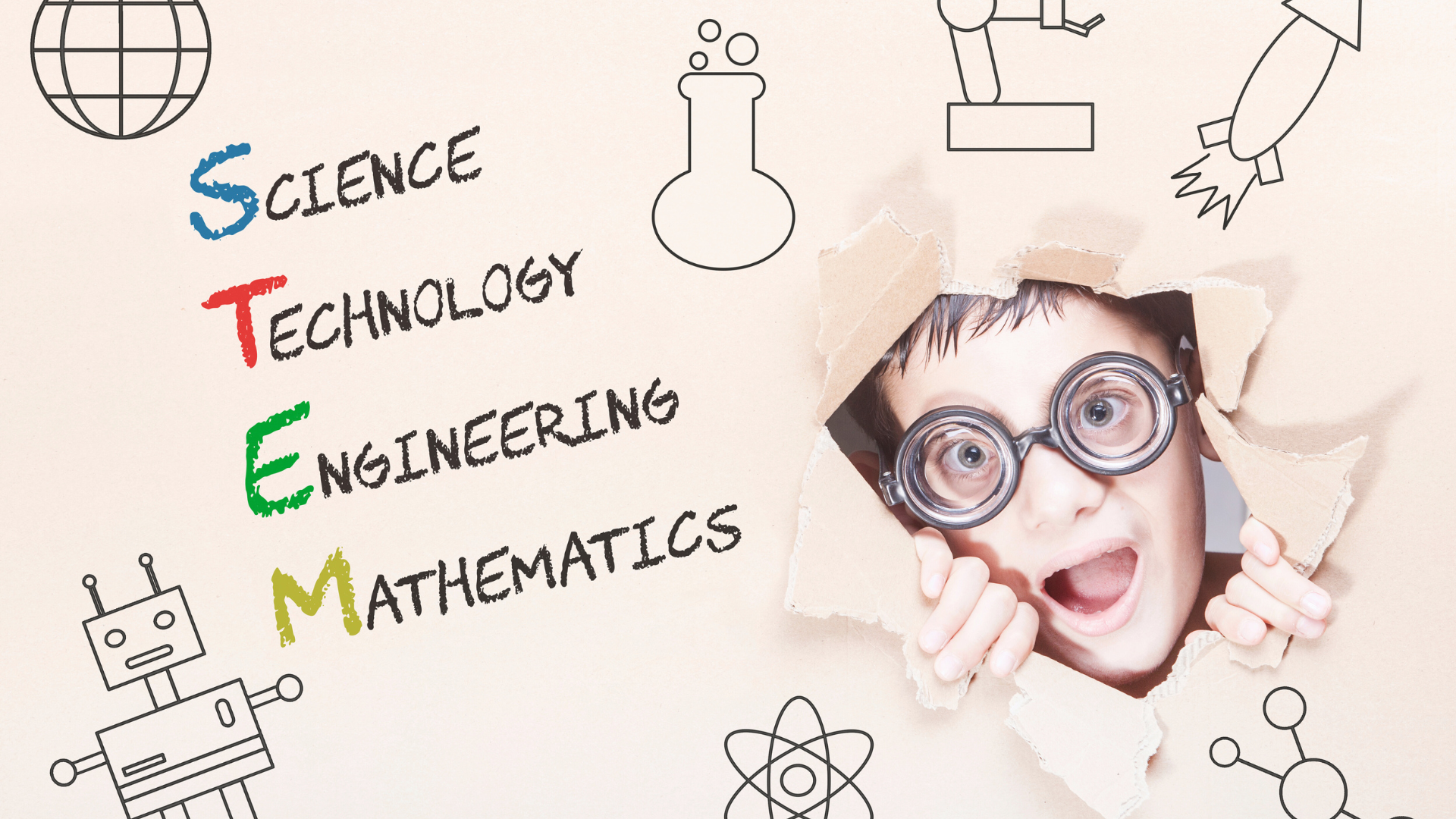

STEM education for young learners focuses on teaching science, technology, engineering, and math skills early in life. This approach builds a foundation that helps children understand the world and develop problem-solving abilities.
Introducing STEM concepts at a young age encourages curiosity and critical thinking, which are essential for future academic and career success. Hands-on activities and real-world applications make these subjects accessible and engaging for young students.
By integrating STEM into early education, children gain confidence in tackling challenges and learn to work collaboratively. This prepares them for a wide range of opportunities as they grow.
Understanding STEM Education for Young Learners
STEM education introduces children to science, technology, engineering, and mathematics through interactive and practical experiences. It emphasizes problem-solving, creativity, and real-world applications that build foundational skills.
Definition of STEM for Early Ages
STEM for young learners refers to teaching fundamental concepts from science, technology, engineering, and mathematics tailored to their developmental levels. It encourages exploration, observation, and hands-on activities that make abstract ideas concrete.
At early ages, STEM focuses more on skills like curiosity, pattern recognition, and simple experimentation rather than formal content. For example, children might learn basic counting through building blocks or explore nature to understand simple scientific ideas.
The goal is to foster inquiry-based learning where children ask questions and find answers through guided discovery, setting the stage for more complex STEM subjects later.
Core Components of STEM
STEM learning integrates four key domains:
- Science: Observing and understanding natural phenomena.
- Technology: Using tools and technology to solve problems.
- Engineering: Designing and building solutions.
- Mathematics: Recognizing patterns and working with numbers.
Each component overlaps and supports the others in activities. For instance, designing a simple bridge involves engineering concepts, measurement (math), understanding materials (science), and sometimes using technology tools.
Skills developed include critical thinking, collaboration, and communication. Activities are often project-based, encouraging children to apply concepts rather than memorize facts.
STEM vs. Traditional Education Models
Traditional education often separates subjects and emphasizes memorization and passive learning. STEM education breaks these silos with an integrated, hands-on approach.
STEM promotes active engagement, allowing learners to experiment and test ideas. It prioritizes process over correct answers, which contrasts with traditional models focused on performance on tests.
Young learners in STEM settings typically work in groups, fostering social skills along with academic ones. In contrast, traditional models may emphasize individual work.
This experiential learning prepares children to evolve technology and complex problem-solving demands more effectively.
Benefits of Early STEM Education
Early STEM education builds a foundation in skills that are essential for academic and real-world success. It enhances mental processes, sharpens thinking abilities, and fosters an interest in exploration and innovation from a young age.
Cognitive Development
Introducing STEM subjects early improves memory retention, attention span, and mental flexibility. Activities involving science, technology, engineering, and math stimulate various brain regions responsible for analytical thinking and reasoning.
Young learners develop pattern recognition and spatial awareness through hands-on tasks like block building or simple coding exercises. These experiences strengthen neural pathways that support learning complex concepts later.
Exposure to STEM also helps children process information logically and make connections between abstract ideas and tangible outcomes. This kind of cognitive growth prepares them for advanced learning challenges.
Problem-Solving and Critical Thinking Skills
STEM education challenges children to identify problems, hypothesize, and test solutions systematically. Through experiments and projects, they learn to analyze situations and adjust their approach based on results.
This iterative process enhances resilience and teaches that mistakes are part of learning. Students become more adept at breaking down problems into manageable steps, leading to clearer, more effective solutions.
Critical thinking skills driven by STEM practices improve decision-making and encourage a methodical approach to everyday challenges. These competencies transfer to non-STEM areas, benefiting overall academic performance.
Encouraging Curiosity and Creativity
Early STEM learning encourages asking questions and exploring “how” and “why” in the world around them. This curiosity motivates children to investigate concepts independently and seek evidence-based answers.
Creative thinking is boosted through design tasks where there are multiple solutions. STEM activities promote trial, error, and innovation rather than a single right answer.
In fostering creativity alongside logical reasoning, STEM helps develop well-rounded thinkers who can adapt ideas and invent new approaches, essential traits in a rapidly changing world.
Foundational STEM Concepts for Young Learners
Introducing foundational concepts early helps children build critical thinking and problem-solving skills. Hands-on activities, simple tools, and natural curiosity drive their engagement and understanding.
Age-Appropriate Science Activities
Young learners benefit from experiments that are safe, interactive, and relatable. Activities like growing plants, observing weather changes, or exploring magnets foster observation and inquiry skills.
Using everyday materials, children can explore properties such as texture, weight, and temperature. Asking questions like “What happens if we mix these?” encourages exploration and critical thinking.
Visual aids like charts or simple drawings help explain concepts such as the water cycle or seasons. These experiences lay the groundwork for scientific reasoning through direct engagement with the world.
Basic Technology Skills
Introducing technology early focuses on familiarity, not mastery. Kids can learn to operate simple devices such as tablets or educational robots that respond to commands.
Teaching basic concepts like cause and effect through apps or programmable toys develops logical thinking. Navigating user-friendly interfaces supports hand-eye coordination and sequencing skills.
Safety and responsible use are emphasized, including recognizing digital boundaries and asking for help. Early experiences with technology build confidence and prepare children for more complex skills later.
Early Engineering Principles
Engineering concepts begin with building and design activities. Using blocks, LEGO, or simple kits teaches balance, stability, and basic mechanics.
Problem-solving is central: children predict outcomes, test ideas, and refine their designs. This process promotes perseverance and creative thinking.
Introducing vocabulary like “structure,” “strength,” and “function” connects play to core engineering ideas. These early experiences encourage a mindset of construction and exploration.
Strategies for Teaching STEM to Children
Effective STEM teaching involves active engagement, seamless integration in various subjects, and encouraging teamwork. Methods focus on practical experience, connecting concepts across disciplines, and building communication skills to prepare children for problem-solving.
Hands-On Learning Approaches
Hands-on learning encourages children to explore STEM concepts through direct manipulation. Activities like building simple machines or conducting experiments provide a tangible understanding.
Using materials such as LEGO kits, circuit boards, and coding toys makes abstract ideas concrete. This approach promotes critical thinking by allowing learners to test hypotheses firsthand.
Teachers should design tasks that encourage trial, error, and iteration. Reflection after activities helps children link experience with theory. Consistent use of hands-on techniques develops skills in observation, analysis, and creativity.
Integrating STEM Across Subjects
STEM concepts gain depth when linked to reading, writing, and the arts. For example, students can write reports on science experiments or use math to create art patterns.
Curriculum alignment lets learners see the relevance of STEM beyond isolated lessons. Cross-disciplinary units can cover topics like environmental science with elements of geography, technology, and data interpretation.
Incorporating storytelling, drawing, or drama reinforces understanding and retention. This integration supports diverse learning styles and creates a cohesive educational experience.
Fostering Collaboration and Communication
Group projects help children develop teamwork and verbalize their ideas clearly. Activities like group coding challenges or science fairs require listening, sharing, and problem-solving together.
Peer discussion encourages reflection and adaptation of strategies. Teachers can assign roles to structure interaction, ensuring each child contributes.
Effective communication skills gained through these experiences aid childhood social development and prepare learners to work in STEM fields where cooperation is essential.
Utilizing Technology in Early STEM Education
Technology plays a crucial role in making STEM subjects accessible and engaging for young learners. Interactive tools, digital skills, and controlled internet access help build foundational knowledge and confidence.
Educational Tools and Apps
Several apps and tools are designed specifically for early STEM education, combining learning with play. Platforms like ScratchJr introduce coding concepts through simple block-based programming. Tools such as Osmo blend physical play with digital interaction, encouraging problem-solving and creativity.
Educational apps often focus on subjects like math, science, and engineering through age-appropriate games and challenges. They provide instant feedback, making it easier for children to understand mistakes and try again.
Screen time should be purposeful and limited, with tools selected based on curriculum alignment, user friendliness, and evidence of educational value.
Digital Literacy for Children
Digital literacy sets a foundation for effective use of technology. It covers basic skills like operating devices, recognizing reliable sources, and understanding privacy.
Young learners must grasp concepts like typing, navigating apps, and using a mouse or touchscreen efficiently. Teaching them how to distinguish between ads and content or identifying credible websites builds critical thinking early.
Parents and educators should introduce these skills in small, manageable steps, reinforcing them through repetition and example.
Safe Exploration of Online Resources
Online safety is a major concern in STEM education due to the internet’s vast, unfiltered content. Filtering software and parental controls limit exposure to inappropriate material.
Children should be taught the importance of privacy and safe communication. Clear rules about sharing personal information or interacting with strangers help prevent risks.
Supervised use of vetted educational websites ensures children benefit from quality content while staying protected.
Supporting STEM Learning at Home
Encouraging STEM learning at home involves hands-on activities and active participation from family members. Simple, consistent practices can build curiosity and understanding in children.
Family Involvement in STEM Activities
Families can foster STEM skills by engaging in activities that combine fun with learning. This might include visiting science museums, watching educational programs, or playing games that emphasize problem-solving and logic.
Parental involvement boosts a child’s motivation and confidence. Talking through scientific concepts or math problems during daily routines creates natural learning moments without pressure. Scheduling regular STEM-related discussions or challenges can also maintain consistent engagement.
Additionally, parents should encourage questions and explore answers together. This approach promotes critical thinking and helps children understand that struggle and mistakes are part of learning.
Home Experiments and Projects
Hands-on experiments stimulate curiosity and reinforce STEM concepts. Simple projects like growing crystals, building circuits using basic kits, or experimenting with water density provide practical learning.
Safety and age-appropriate materials are essential. Clear instructions, supervision, and gradual complexity help children stay engaged without frustration or risks.
Tracking results and discussing observations strengthens scientific reasoning. Using tools like journals or digital apps to record findings encourages organization and reflection in young learners.
Addressing Challenges in Early STEM Education
Tackling barriers in early STEM learning requires focused strategies on social and structural issues. Attention to biases and physical accessibility makes STEM more engaging and equitable for all children.
Overcoming Gender Stereotypes
Gender stereotypes in STEM often emerge from early childhood through cultural messaging and media. These stereotypes can discourage girls from pursuing science or technology by suggesting that those fields are mainly for boys.
Educators can counteract this by presenting diverse role models and encouraging all students equally during STEM activities. Curriculum choices that highlight contributions from women in STEM help reinforce that ability is not gender-specific.
Creating classroom environments where questions and curiosity are valued over competition also reduces pressure tied to gender expectations. Active encouragement and neutral language during lessons subtly influence children’s views on who belongs in STEM.
Ensuring Accessibility and Inclusion
Physical and resource barriers limit STEM participation for children with disabilities or from underserved communities. Ensuring accessible tools, like adaptive technologies and flexible lesson formats, allows wider engagement.
Schools can partner with local organizations to provide equipment and support for families lacking resources. Inclusive STEM education also means curricular adaptations that respect different learning styles and abilities.
Key actions include:
- Providing hands-on, tactile materials for varied needs
- Designing activities that do not rely solely on one sensory input
- Scheduling support sessions for personalized assistance
These measures help create an environment where every young learner can explore STEM subjects confidently and effectively.
Future Trends in STEM Education for Young Learners
Innovations in educational tools and approaches are shaping how children engage with STEM subjects. At the same time, STEM education is becoming foundational for skills development beyond childhood, impacting lifelong learning strategies.
Emerging Technologies in Early Education
Interactive technologies like augmented reality (AR) and virtual reality (VR) are increasingly used to create immersive learning experiences. These tools help visualize complex scientific concepts and provide hands-on problem-solving without safety risks or high costs.
Robotics kits designed for young children promote coding and engineering skills through play, making abstract ideas tangible. Adaptive learning platforms adjust content in real-time based on a student’s progress, offering personalized support.
Moreover, integration of AI-driven educational games encourages critical thinking. Schools adopting these technologies report improved engagement and understanding, especially in math and science fundamentals.
The Role of STEM in Lifelong Learning
STEM skills acquired early equip learners to adapt to rapidly changing technologies in their careers and daily lives. Early exposure fosters a mindset of curiosity and problem-solving that supports continuous education.
Employers increasingly value abilities like data literacy, computational thinking, and innovation, which begin developing through early STEM education. This foundation facilitates learning advanced topics and transitioning between diverse fields.
Educational models are shifting toward modular, skill-based pathways, allowing learners to revisit STEM concepts throughout life. Emphasizing adaptability and collaboration prepares individuals for evolving job markets and global challenges.